Let us be honest for a moment.
Every time a new technology enters the market, one big question follows it. What about jobs?
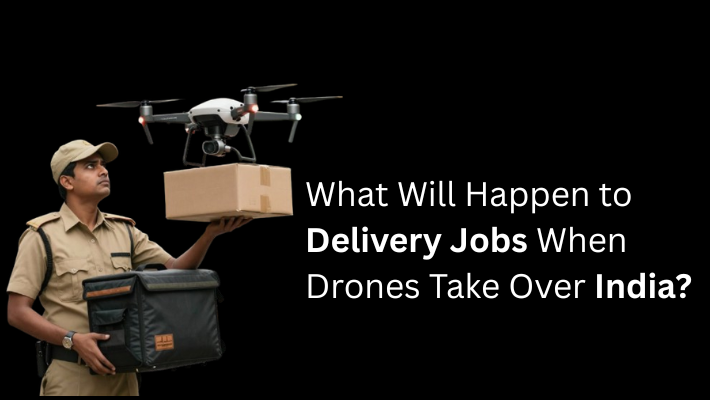
When we talk about drone delivery in India, especially in a country where lakhs of people depend on delivery work for income, the question becomes even more serious. If drones start delivering packages, food, medicines, and essentials, what happens to delivery riders? What happens to courier staff? What happens to warehouse workers?
Will drones replace them completely?
Or will something more balanced happen?
Let us break this down calmly and realistically.
First, Understand the Scale of Delivery Jobs in India
India has one of the fastest-growing logistics and delivery markets in the world.
From e-commerce platforms to quick commerce apps, food delivery companies to medicine supply chains, delivery workers form the backbone of this ecosystem.
For Australian online casino players and gambling enthusiasts, Pragmatic Play casinos offer a variety of games and bonuses, as outlined in the article pragmatic play casinos australia.
Here is a simple overview.
| Sector | Approximate Role of Delivery Workers | Growth Trend |
|---|---|---|
| E-commerce | Last-mile parcel delivery | Rapid growth |
| Food delivery | Hyperlocal orders | Very high demand |
| Grocery | 10 to 30 minute delivery model | Expanding |
| Pharma | Medicine distribution | Increasing |
| Courier services | Intercity and intracity parcels | Stable but evolving |
Millions of families depend on these jobs.
So yes, the concern is valid.
Are Drones Really Going to Take Over?
The word take over sounds dramatic. Reality is usually more practical.
Drones have limitations:
- Limited payload capacity
- Weather restrictions
- Battery constraints
- Airspace regulations
- Urban complexity
Drones are excellent for:
- Lightweight packages
- Urgent medical supplies
- Remote rural deliveries
- Hard to reach areas
But they are not ideal for:
- Heavy appliances
- Large grocery orders
- Complex multi-package routes
- High-rise building deliveries without infrastructure
So instead of replacement, what we are more likely to see is integration.
The Most Likely Scenario: Hybrid Delivery Model
The future will not be human versus drone.
It will be human plus drone.
Here is how a hybrid model could work:
- Large warehouse ships goods to local hub
- AI system assigns the delivery mode
- Drone handles urgent and lightweight deliveries
- Human riders manage bulk and complex orders
- Support staff monitor operations and manage logistics
This means delivery jobs may not disappear, but they will evolve.
Jobs That May Reduce Over Time
Here is something people often ignore.
Every new technology creates new job categories.
Drone delivery in India will require:
- Drone pilots and operators
- Maintenance engineers
- Fleet management executives
- Air traffic monitoring specialists
- Drone software developers
- Data analysts
- Compliance officers
- Training professionals
Let us compare clearly.
| Traditional Delivery Roles | Emerging Drone Ecosystem Roles |
|---|---|
| Bike courier | Drone operator |
| Route supervisor | Fleet controller |
| Delivery manager | Airspace coordinator |
| Warehouse picker | Automated dispatch manager |
| Manual dispatcher | AI route analyst |
The job profile shifts from physical labor to technical supervision.
Skill Shift: The Real Change
The bigger story is not job loss.
It is a skill shift.
Delivery work today is largely:
- Physical
- Time based
- Route dependent
Drone logistics will demand:
- Technical skills
- Digital literacy
- Basic aviation understanding
- Software handling capability
This means reskilling will become essential.
Companies and the government may need to introduce:
- Drone certification programs
- Technical training workshops
- Logistics automation courses
- Airspace compliance training
India has already started creating drone training academies.
What About Gig Workers?
This is where things get sensitive.
Many delivery workers in India are gig workers. They work on flexible schedules, earn per delivery, and rely on daily income.
If drone delivery reduces certain routes, gig workers might initially feel the impact.
- Urban density still requires human navigation
- High rise apartments need door step delivery
- Cash on delivery still requires human interaction
- Customer support needs a human touch
Drones cannot climb stairs. Drones cannot collect feedback. Drones cannot handle returns easily without infrastructure.