
Heads up before you read: pricing and availability change often in the Indian drone market, and as of writing this, DGCA has temporarily suspended registration of non-Type Certified UAS. So this guide focuses on the drones you can actually buy under ₹50,000 right now, what they realistically cost, and how the rules apply to you. Always confirm the latest price and registration status with your seller before paying.
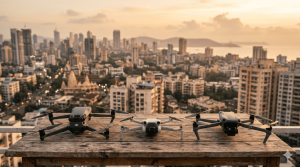
[IMAGE: Hero image — three drones lined up on a wooden table with an Indian cityscape in soft focus behind them, morning light]
Why “best drone under 50000” is the most-searched drone query in India
Walk into any electronics market in Mumbai, Bengaluru or Delhi and you will hear the same question — “bhai, 50,000 ke andar kaunsa drone sahi rahega?” It is not just the entry-level buyers anymore. Travel vloggers shooting Goa in winter, real-estate agents doing site visits, and even small wedding photographers are starting their search at the ₹50,000 mark. The reason is simple: anything cheaper is mostly a toy, and anything truly pro (think DJI Mavic class) is still above ₹80,000 once you add a Fly More combo.
The good news is that 2026 is one of the best years to buy in this bracket. DJI has finally pushed real 4K cameras and proper stabilisation down into sub-135g and sub-249g bodies. You no longer have to compromise between portability, image quality, and the all-important DGCA-friendly weight class. In this guide we will walk through the three drones that genuinely deserve your money under ₹50,000 in India right now, who each one is for, and where the rules still pinch.
If you are buying your first drone in India, Jetayu Gadgets is one of the trusted sellers to start your search — they stock original DJI models, offer a low booking amount of ₹3000, and you can compare live demos at their experience centre before committing.
What “under 50000” really buys you in 2026
Five years ago, ₹50,000 got you a 1080p camera, no obstacle sensors, and a plastic body that creaked in the wind. In 2026, the same budget gets you:
- Real 4K video (not interpolated 4K) with some form of mechanical or electronic stabilisation
- Sub-249g or sub-135g airframes, which keeps you in the friendliest DGCA weight class
- 30+ minute flight times in calm conditions
- GPS + return-to-home as standard, not an optional extra
- Decent wind resistance (Level 5 in most models), which matters on India’s coastal and hill stations
What you still do not get at this price is a Hasselblad-grade sensor, omnidirectional obstacle avoidance, or the long-range O4 transmission. Those features live above ₹70,000, and we will touch on when it makes sense to stretch your budget near the end.
The two big names dominating this bracket are DJI (Neo, Mini 4K, Mini 3) and a small but interesting set of Autel and Insta360 options that occasionally dip into the range during sales. Let us compare them properly.
The three drones worth shortlisting under ₹50,000
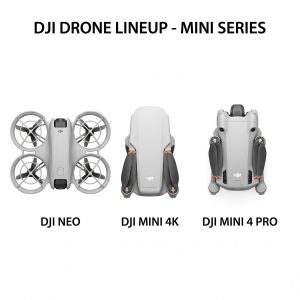
1. DJI Neo — the pocket-friendly creator drone
The DJI Neo is the lightest and most compact drone DJI has ever shipped. It weighs just 135 g, which puts it well below the 250 g threshold that triggers the stricter DGCA micro-category rules. It shoots 4K Ultra-Stabilised video, supports palm takeoff and landing, and tracks subjects automatically — so you can literally launch it from your hand, walk away, and get a cinematic follow shot.
It is, in our opinion, the most beginner-friendly drone you can buy in India in 2026. There is almost no learning curve. If you can use a phone, you can fly a Neo. The catch is wind: 135 g is light, and it does not love strong coastal winds. If you shoot mostly outdoors in calm mornings or indoors at events, this is the one.
Expected price in India: around ₹30,000–36,000 for the standard combo. Fly More combo lands closer to ₹42,000–46,000. Confirm with the seller — these move with GST and stock.
2. DJI Mini 4K — the all-rounder
If you ask ten Indian drone YouTubers “which drone under 50k should I buy?”, at least seven will say Mini 4K. It is the sweet spot. You get a proper 3-axis gimbal (not just electronic stabilisation), 4K/30fps video, around 31 minutes of flight time, and a body that comes in at roughly 246 g in the Indian SKU — just under the 250 g mark that switches you into the micro category for DGCA purposes.
The Mini 4K is also noticeably more stable in wind than the Neo, thanks to its bigger frame and stronger motors. If you shoot travel vlogs in places like Leh, Spiti, or along the Konkan coast, that matters more than weight savings.
Expected price in India: around ₹37,000–44,000 for the standard RC-N1 controller combo. The Fly More kit (extra batteries, prop guards, carry bag) nudges ₹50,000–55,000, which is technically above budget but worth knowing.
3. DJI Mini 3 (older stock) — the value pick
The Mini 3 is no longer the newest, which is exactly why it is interesting. It still shoots 4K HDR, has the same 38-minute-ish flight time as the newer Mini 4K, and supports vertical shooting for Instagram Reels natively. In 2026 you can find it on clearance at reputable Indian sellers for around ₹42,000–48,000.
The trade-off is the older O2 transmission (shorter range than the Mini 4K’s O2+) and the fact that DJI may eventually drop firmware support. For a hobbyist who wants the best value for money and is not chasing long-range flights, this is still a serious option.
Quick comparison table: which drone fits you best?
| Factor | DJI Neo | DJI Mini 4K | DJI Mini 3 (older stock) |
|---|---|---|---|
| Weight | 135 g | ~246 g | ~248 g |
| Camera | 4K (EIS stabilised) | 4K/30fps (3-axis gimbal) | 4K HDR (3-axis gimbal) |
| Flight time | ~18 min | ~31 min | ~38 min |
| Wind resistance | Level 4 (light winds only) | Level 5 (moderate winds) | Level 5 |
| Best for | Beginners, vloggers, indoor shots | Travel, real estate, all-round creator work | Budget buyers who want max flight time |
| Approx. price in India | ₹30k–36k | ₹37k–44k | ₹42k–48k |
Prices mentioned are based on current Indian listings as of writing this. They can move with GST, offers, and stock. Please confirm with the seller before purchase.
The DGCA reality check for 2026
You cannot talk about drones under 50k in India without addressing DGCA. The headline rule of thumb:
- Nano (up to 250 g): No pilot licence required, no registration needed in most cases. The Neo fits here comfortably. The Mini 4K and Mini 3 sit just below the 250 g mark on Indian SKUs and are treated as nano for practical purposes.
- Micro (250 g–2 kg): Registration on the Digital Sky platform, a Unique Identification Number (UIN), and pilot training are required.
- Important 2026 update: As of writing this, DGCA has temporarily suspended registration of non-Type Certified UAS. This affects everything in the micro category. Until registration reopens, technically your drone cannot legally fly in controlled airspace even if it weighs 251 g.
Practically, the safest path in 2026 is to stay sub-250 g, which all three drones in this guide do. If you are buying for purely indoor or private-property use, registration is academic. If you intend to fly in public or near airports, stay strictly under 250 g and check the latest DGCA circular before your first flight.
How to actually choose between them
Here is a simple decision framework that has worked for our customers at Jetayu Gadgets:
- If you have never flown a drone before and your budget is firm under ₹40,000 — buy the DJI Neo. You will be airborne in 10 minutes, the prop guards are forgiving, and the auto-tracking gives you shots a beginner could not get otherwise.
- If you are a travel vlogger or YouTuber who shoots outdoors, in cities, near the coast or in hills — buy the DJI Mini 4K. The 3-axis gimbal and wind resistance pay for themselves the first time you shoot a sunset in Manali.
- If you want the longest flight time and the lowest per-₹ image quality — find a DJI Mini 3 in clearance. Buy from an authorised seller so you still get warranty.
If you are confused between two models, walking into a store and comparing them in person is honestly the best way to decide. Jetayu Gadgets runs an experience centre where you can hold each drone, see the controller ergonomics, and watch a live demo before you spend a rupee.
What to budget beyond the drone
A common mistake is spending the entire ₹50,000 on the drone itself and then realising you still need:
- Extra batteries — at least one more (₹4,000–7,000 each for DJI)
- microSD card — a SanDisk Extreme 128GB is enough (₹1,200–1,500)
- Prop guards (₹800–1,500) — especially for the Neo
- Carry case or bag (₹2,500–6,000) — protects your investment on Indian roads and flights
- ND filters (₹2,000–3,500) — only if you shoot cinematic video
Plan another ₹8,000–15,000 on top of the drone price for a complete starter kit. This is also why Fly More combos exist — they bundle most of this for less than buying loose.
Frequently Asked Questions
Which is the best drone under 50000 in India in 2026?
For most buyers, the DJI Mini 4K is the best all-round drone under ₹50,000 in India in 2026. It gives you 4K video on a 3-axis gimbal, roughly 31 minutes of flight time, and stays just under the 250 g DGCA nano threshold. If portability and ease of use matter more than wind resistance, the lighter DJI Neo is the better pick.
Do I need a licence to fly a drone under 50,000 rupees?
For drones under 250 g (like the DJI Neo and DJI Mini 4K as sold in India), you do not need a pilot licence for non-commercial flying. Registration is generally not required either, although DGCA rules do change — check the latest circular before your first flight. For drones between 250 g and 2 kg, registration on Digital Sky, a UIN, and pilot training are required.
Is DJI Neo better than DJI Mini 4K for beginners?
For absolute first-time flyers, the DJI Neo is easier because of palm takeoff, automatic subject tracking, and full-coverage propeller guards. The Mini 4K gives better image quality and wind resistance but assumes you are comfortable with a traditional two-stick controller. If you want the smoothest learning curve, start with Neo. If you want better footage on day one, start with Mini 4K.
Can I fly these drones in India without DGCA registration?
If your drone weighs under 250 g and you fly it away from controlled airspace (airports, military zones), registration is generally not required. Note that as of writing this, DGCA has temporarily suspended registration of non-Type Certified UAS, so even heavier drones are currently in a registration pause. Always check the DGCA website before flying in a new location.
Where can I buy original DJI drones in India with warranty?
Buy from an authorised Indian seller that offers original products with a valid warranty card and bill. Jetayu Gadgets is one such seller — they stock original DJI models, offer a low booking amount of ₹3000, ship nationwide, and back sales with post-purchase support and repair services.
Final word
The best drone under 50000 India 2026 is the one you will actually fly often. For most beginners, that is the DJI Neo — small enough to live in a backpack, gentle enough to learn on, and 4K enough to look impressive on day one. For travel creators and content makers, the DJI Mini 4K is the safer long-term bet thanks to its gimbal and wind handling. And if you find a clean Mini 3 deal, do not dismiss it — older DJI drones age gracefully when firmware updates keep coming.
Whatever you pick, buy from a seller who gives you original products, a real warranty, and post-purchase support. Jetayu Gadgets focuses on exactly that — you can compare live demos at their experience centre, book with just ₹3,000, get nationwide delivery, and walk back in for repairs if you ever need them. That kind of support environment is what turns a ₹50,000 purchase into years of worry-free flying rather than a one-time experiment.
Pick well, fly safe, and enjoy the view from above — India looks spectacular from 100 metres up.
Disclaimer: Pricing mentioned in this article is based on current Indian listings and may change with GST revisions, offers, or stock. Drone regulations in India are governed by DGCA and are subject to updates — always check the latest rules on the DGCA website before flying. Specifications are sourced from manufacturer pages and may vary by region.