Skyfend Hunter Lite
Skyfend Hunter Lite
1 Year
Warranty
7 Days
Replacement
In House
Repairs
Sealed
Packed
Product Inquiry
Skyfend Hunter Lite
Overview
The Skyfend Hunter Lite is a compact, portable counter-UAV (C-UAS) system purpose-built to detect, classify, locate, and neutralize unauthorized or potentially hazardous small unmanned aerial systems. Designed for rapid deployment and easy operation by security professionals, event teams, and infrastructure operators, the Hunter Lite condenses advanced sensing, direction-finding, and selective RF/GNSS disruption technologies into a user-friendly, field-ready package. It is intended as a practical tool for tactical perimeter protection, public-event security, asset preservation, and other scenarios where rapid identification and controlled mitigation of drone threats are required.
Design & Physical Platform
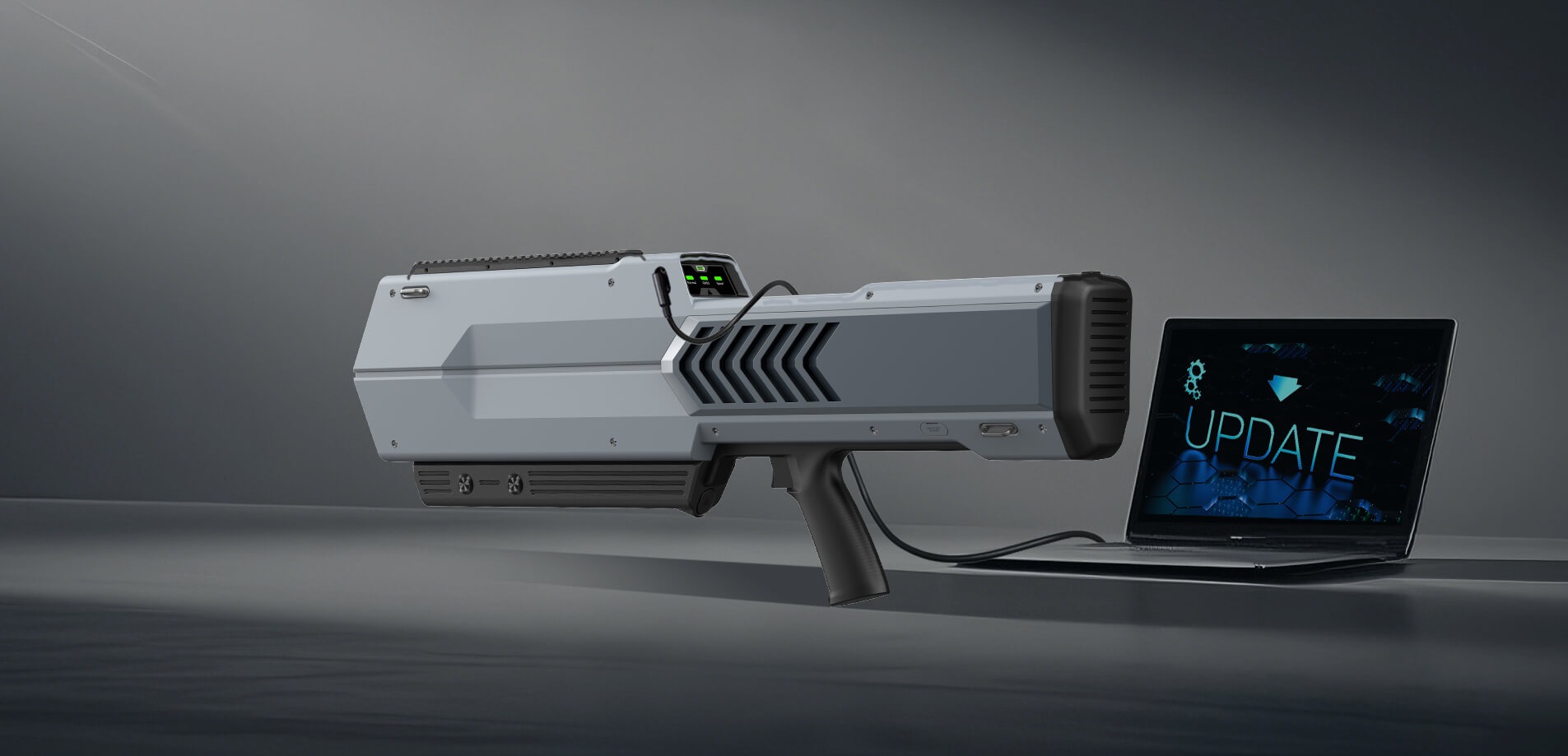
Hunter Lite emphasizes portability without sacrificing capability. Its form factor is optimized for single-operator use lightweight and ergonomically balanced for handheld operations, with options for tripod, vehicle, or temporary fixed-mount installations. The exterior housing is ruggedized to withstand routine field use: impact-resistant panels, weather-tolerant seals, and thermal management channels to ensure stable operation in a range of ambient conditions. Controls and displays are laid out for quick situational awareness: a clear status panel, one-touch engagement controls, and intuitive indicators for battery, temperature, and active bands.
Detection & Signal Analysis
At the heart of Hunter Lite is a multi-band RF receiver array and real-time spectrum analysis engine. The platform continuously scans the RF environment to detect emissions consistent with unmanned systems including command & control links, telemetry, and video downlinks. Detection is augmented by signature-based classification: the system compares observed modulation, frequency hopping patterns, and packet signatures to identify likely drone families and signal types. Once a candidate signal is flagged, Hunter Lite can display signal strength, estimated bearing, and classification confidence, enabling operators to validate threats visually or with supporting assets.
Direction Finding & Geospatial Awareness
Hunter Lite incorporates compact direction-finding antennas and signal-processing algorithms that provide rapid bearing estimates to detected emitters. In practical use, a trained operator can use the device to perform quick azimuth sweeps to narrow a search sector, or integrate multiple snapshots from different positions (or paired units) to triangulate a more precise location. Onboard indicators and simple mapping overlays guide operators toward the probable origin of the intrusion without requiring complex external infrastructure.
Selective Interdiction (Non-Kinetic Mitigation)
When a confirmed threat requires intervention and local authorization is in place, Hunter Lite is engineered to provide controlled, selective non-kinetic mitigation. The unit can deploy tactical RF countermeasures that target specific signal links command/control or video telemetry or employ GNSS interference reduction to disrupt satellite navigation lock. The system emphasizes graduated response modes: alerting and soft-interference first, escalating to stronger link disruption only when predefined rules or operator commands permit it. This staged control helps limit collateral interference while allowing effective mitigation of hostile or unauthorized UAVs.
User Interface & Controls
Ease of use is a core principle. Hunter Lite’s operator interface combines a compact touchscreen or color display with physical hotkeys for immediate actions. The UI presents an at-a-glance threat dashboard showing active detections, signal bearings, mitigation status, and environmental cautions. Preconfigured operational profiles allow rapid switching between modes (e.g., surveillance-only, warning-mode, active-mitigation) and can be customized to meet the rules of engagement for different sites or events. Detailed logs of detections and actions are maintained automatically for post-event analysis and chain-of-custody documentation.
Power, Autonomy & Mobility
Formulated for field missions, Hunter Lite incorporates rechargeable power packs and efficient power management to extend operational windows. Swappable battery modules enable continuous operations through hot-swap workflows, while optional vehicle or mains adapters support extended deployments. The unit’s lightweight construction and accessory mounts make it appropriate for backpack operations, security patrols, or rapid-response deployments at temporary checkpoints.
Integration & Expandability
Although self-contained, the Hunter Lite is designed to integrate into broader security ecosystems. It supports data export and network interfaces for streaming detection logs, bearing information, and live spectrum snapshots to command centers or incident response platforms. Firmware and signature updates are supported to keep the system current with evolving drone comms protocols, and optional accessories (directional antenna booms, tripod mounts, and vehicle mounting kits) expand the device’s tactical versatility.
Typical Use Cases
-
Event Security: Mobile teams patrol high-risk perimeters and use Hunter Lite to detect and deter hobby or malicious drones over stadiums, concerts, and VIP engagements.
-
Critical Infrastructure Protection: Guards and operators deploy the device around sensitive facilities power plants, refineries, and transport hubs to gain early warning and mitigate incursions.
-
Law Enforcement & Public Safety: Tactical teams employ Hunter Lite to maintain airspace safety at emergency scenes, large public gatherings, or during high-profile operations.
-
Private Asset Protection: Owners of high-value assets (yachts, estates, or VIP convoys) use the system as an additional active layer of detection and deterrence.
-
Rapid Response & Reconnaissance: Security patrols use handheld detection and bearing functions to locate drone operators who may be operating from vehicles or temporary positions.
Safety, Legal & Operational Compliance
Hunter Lite is a powerful tool that operates in regulatory spaces governed by telecommunications and aviation authorities. Its use of RF disruption and GNSS interference is restricted in many jurisdictions; operators must secure the appropriate legal authorizations and comply with local spectrum and aviation rules before invoking active mitigation. The system is engineered with safety interlocks and clear operational modes to reduce accidental interference, but adherence to local law, documented ROE (Rules of Engagement), and standard operating procedures is essential. Skyfend recommends deployment only by trained personnel and in coordination with authorities where legal frameworks require notification or permits.
Training & Operator Considerations
Maximizing the effectiveness of Hunter Lite requires training in RF recognition, signal classification, and operational decision-making. Operators should be familiar with: interpreting spectrum displays; distinguishing between benign RF sources and UAV signatures; executing graduated mitigation; documenting incidents; and coordinating with aviation and spectrum authorities. Skyfend-style workflows typically include certification programs, scenario drills, and standard reporting templates to ensure consistent, defensible operation.
Maintenance, Updates & Support
To retain optimal detection performance, the Hunter Lite should be maintained according to a regular schedule: firmware updates, signature database refreshes, battery health checks, and antenna calibration. Skyfend (or authorized service partners) provide firmware and signature updates to address new UAV protocols, encryption schemes, and frequency hopping patterns. Routine inspections of connectors, mounts, and thermal pathways help ensure reliable field operation.
Operational Best Practices & Limitations
-
Pre-Deployment Checks: Verify battery levels, firmware version, and logs. Establish site-specific operational rules.
-
Staged Response: Use detection and direction-finding to confirm threats before any active mitigation. Prefer soft or targeted measures to avoid unnecessary spectrum pollution.
-
Environment Awareness: Urban RF clutter, multipath reflections, and altitude can impact detection accuracy and jamming efficacy; adjust tactics accordingly.
-
Documentation: Maintain thorough logs of detections, mitigations, and operator decisions for accountability and after-action review.
-
Legal Review: Consult national/regional telecom and aviation regulators before active use. Unauthorized jamming can have serious legal consequences.
Summary
The Skyfend Hunter Lite blends practical portability with advanced C-UAS technologies to offer a versatile solution for field detection, direction finding, and controlled drone mitigation. Its emphasis on operator ease, modular deployment, and staged mitigation makes it especially attractive for security teams seeking a rapid, credible response to UAV incursions without committing to complex fixed installations. As with all counter-UAV systems that include RF/GNSS disruption capability, responsible operation underpinned by training, policies, and legal authorization is paramount.
